
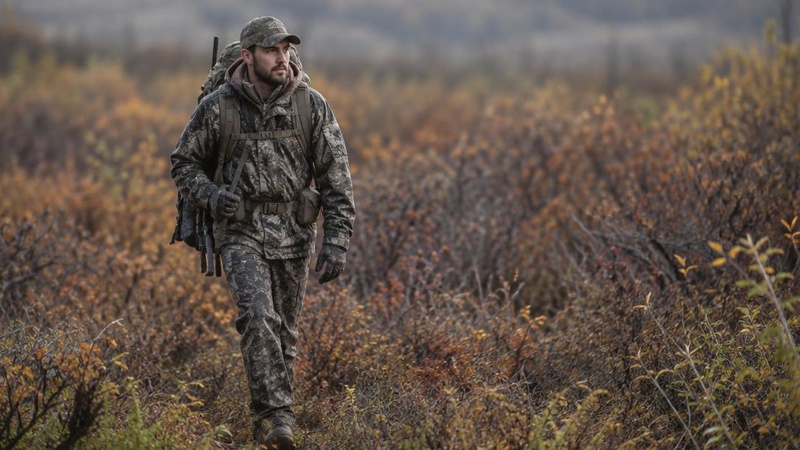
Building a reliable hunting clothing system is more about establishing a routine and checking base layers, insulation layers, rain layers, hunting boots and outer layers of hunting clothing than searching for the ultimate product. These products should be checked, explained and maintained. Local laws and posted range rules must be observed and all maintenance must be done in accordance with the manufacturer’s instructions. Repairing and making adjustments to equipment that affects safety must always be done by qualified people.
Start with the real use case
Start with the real use case. The specifications for clothing components are always related to the real use case. First write down the length of the trip, the weather forecast, the distance to be covered, the method of transport and the level of experience of the user. In this way the components of the clothing system will always be checked against the same criteria and in relation to the same purpose. If you start with specifications for clothing components, you end up with a bunch of them.
Inspect before every outing
Then simply inspect your clothing (same as before) one item at a time in good light for wear, looseness of parts, any signs of contamination, or for any part to have become misadjusted since last use. The results should be noted on a small scrap of paper and a cross put against any items that need to be repaired or replaced before next use.
Make fit part of the safety check
Your personal protective clothing should not pinched, shift about or force you into an unnatural position. Go for a test walk around your garden, local park or wherever you normally go outdoors while wearing the clothing. Do the same movements you would expect to be doing while in the field. If it feels uncomfortable whilst standing still in a warm room then it’s not going to be any better in the field.
Adjust in a controlled order
Changing one thing at a time: When making adjustments to clothing for use, record what changes have been made and test out the clothing in as realistic a scenario as possible. Only return to the previous setting if things get worse. If several settings are changed, it will be difficult to determine which was responsible for an improvement and which for introducing a problem.
Spend where reliability matters
It’s better to spend your budget on items that provide real reliability over pretty accessories. A cheap layer that fits, can be repaired and has spare parts is better than an expensive coat that cannot be repaired for some obscure reason and is too complicated to be serviced locally. Spend on protective gear, qualified tuition and the key items to safe use first. Add nice to have items later.
Plan for weather and transport
Whether you’re tracking in mud, mid-cruise and sweat raining off your brow, or basically exposed in snow – it’s all weather, after all – your attempt to build the practicalest clothing system on earth must, from the off, consider what the worst that nature can throw it is going to do. Next, think about how you will, later, transport the lot, and be strict about what gets packed.
Use clear range and field habits
Also be aware of other people when checking your gear. Make sure to inform your fellow hikers and guides about what you are checking and ask the staff of a range or club about the procedure for things you don’t know. Local commands and rules always take precedence over online advice.
Clean without causing damage
Clean your equipment using the maintenance recommended by the manufacturer. More oil, greater force, or a more aggressive cleaning agent are not better. They can damage surfaces, seals, adhesives, and even optical coatings. Use the recommended cleaning agents and apply them to the correct parts of your equipment. Do not continue to clean when damage is likely to require the services of a repairer.
Review the kit after the trip
Compare what you took with what you actually needed, note what wasn’t used, was difficult to reach for, or would have come in handy in the event of an unexpected delay. Remove unnecessary weight from your kit and replace any consumable items before the next time you head out.
A simple checklist
- The intended use, environmental conditions and local restrictions must be checked prior to selection of the equipment.
- Check fit, condition and operating setting in practice.
- Only carry what you need for the specified activity, and only for the duration of the specified activity.
- Record maintenance of clothing and replace parts that have been damaged rather than mend them.
- Clean, dry and secure everything promptly after returning home.
Final perspective
And remember, a good, practical clothing system is developed by small, consistent steps. First, choose basic, good foundations, test them in normal situations and then, step by step, improve and develop your clothing system. This way you avoid lots of clothes, hasty changes and damage. Your practices and outdoor activities will become calmer and more meaningful.
Practical note 1
The online review can outline what to ask in a shop. However, a shop test will only ever allow you to find out about the personal fit of clothing and also the condition of individual items – and that only by comparison with other similar products.
Practical note 2
Test out the solution. Give it a short practice run. Keep it at an easy pace. Stop when you start to tire and make a note of one thing you have learned that will help you the next time. Rehearse the solution repeatedly rather than trying to come up with a whole host of new solutions in one day.
Practical note 3
When you choose storage containers for your equipment be sure to consider the storage location as much as the container itself. This should be out of extremes of temperature, damp floors and out of the reach of children and other unauthorized users. Use clear and understandable labeling of the containers and do not advertise the valuables stored within them. Keep keys to the storage containers as well as to any additional containers that may be locked within them with responsible adults.
Practical note 4
When purchasing equipment online, look for reviews. Online reviews can suggest questions to ask the retailer but are no substitute for seeing the item for yourself and getting the opinions of an expert as to the pros and and cons of that particular item for personal use.
Practical note 5
A short practice session is usually enough to find out if an idea is working or not. So keep it easy, end it early enough before your body starts to let you down, and write down the one change that you found useful during that practice session. Consistency is more important than trying to solve everything in one session.